

The Areca Palm: A Calm, Low-Maintenance Plant for Indoor Spaces

Discover the Areca Palm — a calm, low-maintenance indoor plant. Learn about its care, benefits, air-purifying qualities, and common problems.
29 Dec 2025
The Areca Palm: A Gentle Plant for Busy Lives and Quiet Corners
Some plants demand attention.
The Areca Palm simply asks for presence.
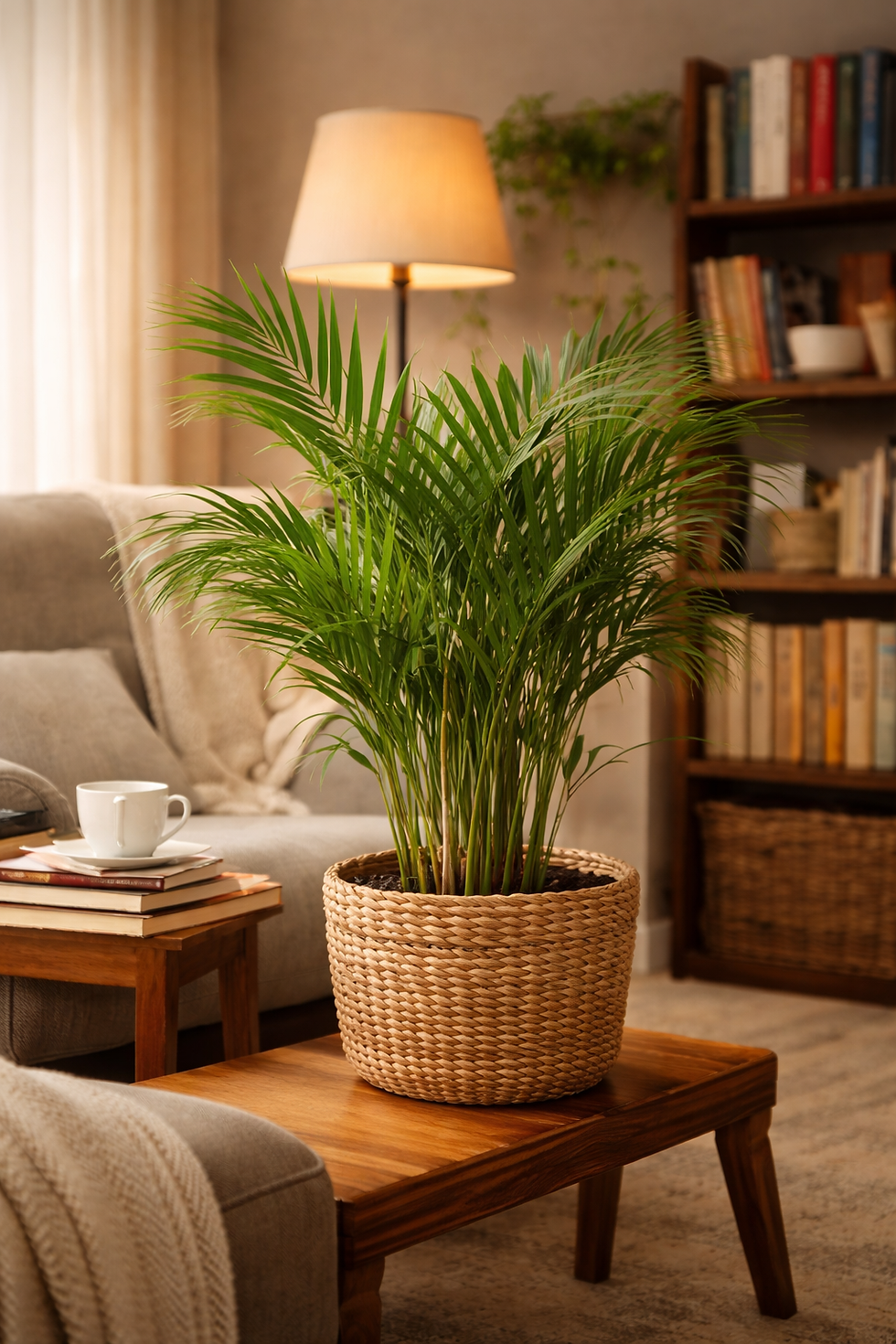
With its soft, feathery fronds and slow, graceful growth, the Areca Palm has a way of settling into a space without asking to be the centre of attention. It doesn’t shout for care. It doesn’t sulk easily. It just grows — steadily, calmly — making it a favourite for homes, reading corners, and workspaces.
Why the Areca Palm Feels So Easy to Live With
The Areca Palm thrives in bright, indirect light, much like the gentle daylight that filters through a window in the morning. It enjoys warmth, appreciates a bit of humidity, and prefers consistency over perfection.
This makes it especially ideal for:
First-time plant parents
People with busy schedules
Homes where care is mindful but not meticulous
You don’t need to hover over it.
You just need to notice it.
Water when the top inch of soil feels dry, ensure good drainage, and place it somewhere it can enjoy light without being scorched by direct sun. That’s usually enough.
A Quiet Air Purifier in Plain Sight
One of the lesser-known facts about the Areca Palm is its air-purifying ability. Studies, including those referenced by NASA’s Clean Air research, have shown that palms like the Areca can help reduce indoor air pollutants while also releasing moisture into the air.
In simpler terms:
It helps improve indoor air quality
It gently increases humidity
It makes indoor spaces feel fresher and easier to breathe in
For homes filled with books, long reading hours, or screen time, this subtle benefit makes a noticeable difference over time.
What the Areca Palm Doesn’t Enjoy (and How to Fix It)
Like all plants, the Areca Palm communicates — just quietly.
Yellowing Leaves
Often a sign of overwatering.
Let the soil dry slightly between waterings and ensure the pot drains well.
Brown Leaf Tips
Usually caused by dry air, underwatering, or excess fertilizer salts.
Mist occasionally, water consistently, and flush the soil with plain water once in a while.
Drooping Fronds
A sign of irregular watering or sudden temperature changes.
Stability matters more than schedules.
Spider Mites
More common in very dry conditions.
Wipe leaves gently and improve humidity to prevent them.
Most problems resolve not with more effort — but with better balance.

Why It Belongs in a Reading Space
The Areca Palm doesn’t just decorate a room — it softens it.
It adds height without heaviness, greenery without chaos, and life without noise.
It’s non-toxic to pets, forgiving to beginners, and rewarding to anyone who prefers slow, steady growth over dramatic transformations.
Much like reading, it reminds us that some things work best when we give them time — and not too much interference. This makes the Areca Palm a low-maintenance indoor plant for beginners and busy homes.


Comments